Blog

  • Owa Shares Indigenous Healing Practice

    Owa Shares Indigenous Healing Practice

    As the world commemorated the International women’s Day in March, to celebrate the strength, resilience and brilliance of women around the world, one Metsiamanong native, Morwalo Owa (63) has proven the strength and brilliance of an Indigenous woman as a household traditional health caregiver while residing in the wilderness Central Kalahari Game Reserve (CKGR) with no modern health facilities or establishments within her vicinity.

    “For us locals to reach out for healthcare services, we have to travel over 300km to New Xade settlement or Ghanzi” she said.

    Owa, who was born and raised in Metsiamanong in the CKGR, narrated that, life in the game reserve was tough, as there were no economic activities that could accelerate local empowerment of the residents.

    She said survival was solely based on the provisions of social/humanitarian services from government and also ploughing rainfed crops in their backyard and domestication of goats, donkeys and horses.

    Owa said since it was a norm that mothers took centre stage when it cames to management of household health care, she went an extra mile with traditional health care especially for the children.

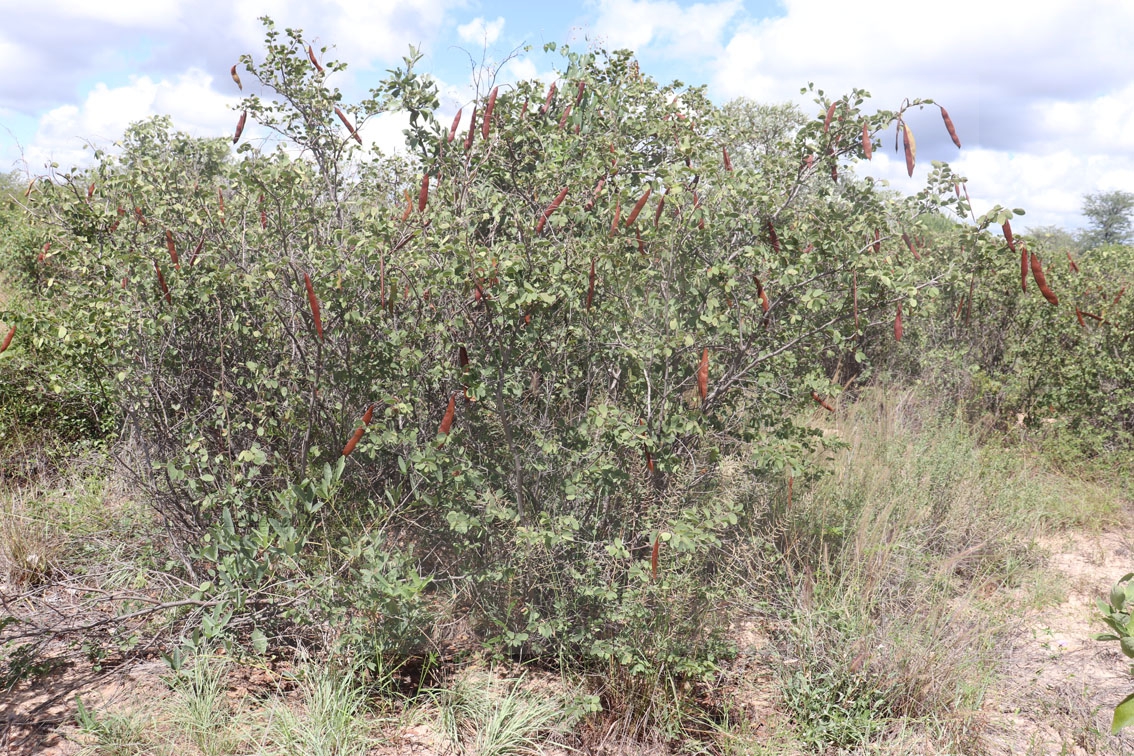
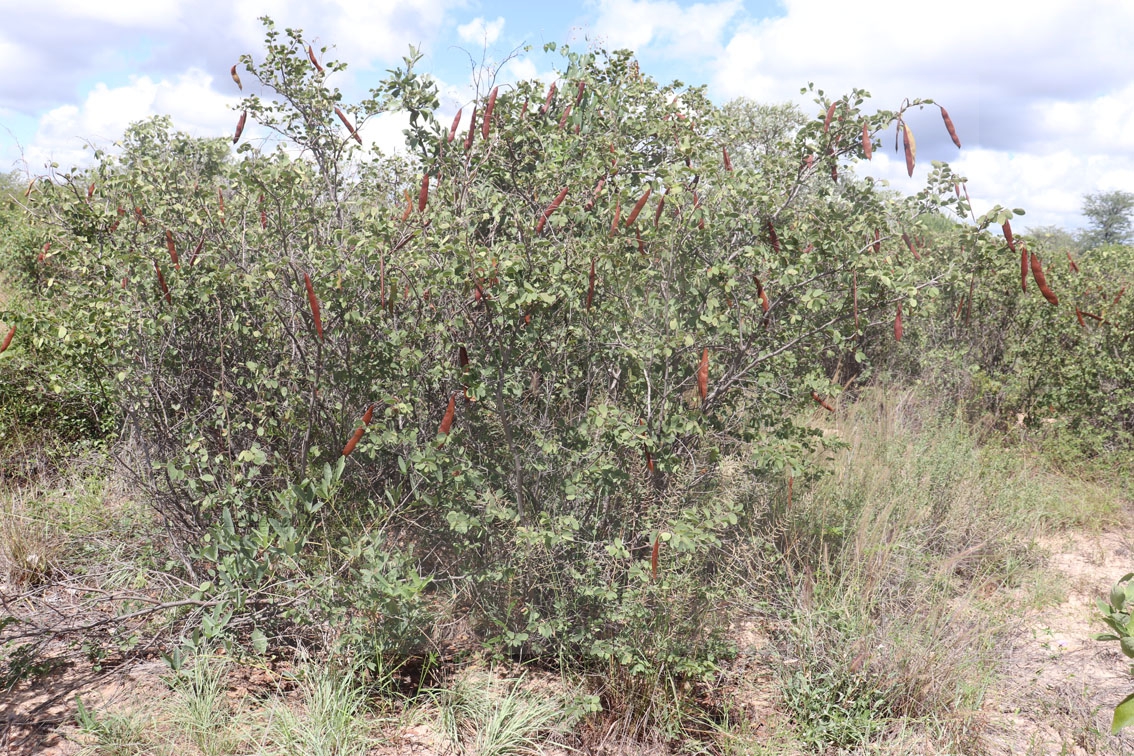
    She indicated that she used ‘mogotswe seeds’ scientifically known as Bahunia macrantha and commonly known as Kalahari camels’ foot, which they gathered from the bushes to make a nutritious powder for malnourished children and other related traditional ailments.

    She said she mostly gathered the seeds after rains and its processing was more of labour intensive.

     She explained that, after gathering the seeds, she broke open the seed pods with a traditional knobkerrie, thereafter, the seeds would be roasted in the pot. 

    After a cooling off period, they would be pounded into a powder.

    She emphasised that the powder would be the final output product and no other ingredients were added, making it an organic product, which would be later stored in containers for later use whenever a need arises.

    She attested that there were no cases of malnutrition in CKGR due to the fact that most women in their communities within the game reserve were knowledgeable with the production of this nutritious medicine and therefore relied on it for the upbringing of healthy children.

    She said the indigenous knowledge on the medicinal purpose was imparted to them by their elders, saying they were keen to nurture it too and preserve it for their young generations in order to preserve their culture from extinction.

    However, Owa decried that, since they lacked local empowerment projects in their communities within the CKGR, she proposed that government could consider to facilitate them to set up joint small industries that would enable them to produce the medicine in bulk upon meeting all the required health standards.

    Moreover, she proposed that, they could be empowered with financial and entrepreneurial skills and be linked with relevant authorities that would test the standard of their medicinal content. 

    She said their wish was to expand their produce to include indigenous fruits to produce various medications and penetrate different markets.

    She said the move would economically uplift indigenous women, help protect traditional health system as well as empowering them to contribute to more inclusive and culturally grounded health approaches within their communities.

  • End of an Era

    End of an Era

    Born and raised in the dusty, quiet village of Digawana over four decades ago, Tshepo “Talk Talk” Motlhabankwe rose to become a household name in Botswana football.

    Like many boys of his generation, in the absence of structured academies, Motlhabankwe honed his skills on makeshift grounds, kicking a plastic ball with friends. Few could have predicted that the shy youngster would mature into one of the country’s most respected footballers.

    According to his former teacher and coach at Lobatse Secondary School, Boniface Lekaba, Motlhabankwe’s talent became evident as early as 1998 when boarding students were just passing time over the weekend soccer game. 

    “He was reluctant to play for the school team at first,” Lekaba recalled. “I think he was intimidated by older, more established players, some of whom were already registered with clubs like Lobatse Stars and Extension Gunners.”

    With encouragement, Motlhabankwe eventually joined the school team, playing primarily at right back, though he occasionally featured in midfield.

    Lekaba revealed that he had earmarked him for Botswana Meat Commission (BMC), where he was coaching at the time, but the problem was from Motlhabankwe’s father, a staunch Extension Gunners supporter.

    After leaving school, Motlhabankwe briefly joined Kanye-based Southern Pirates before making a pivotal move to Extension Gunners.

    Patrick Phale, a close family friend and mentor, shared how they facilitated the move.

    “We took him for trials at Gunners without management knowing,” he said. “When coach Daniel ‘Chico Dance’ Nare accepted him, we then negotiated his release. Back then, transfers were not as complicated as they are today.”

    It was at Extension Gunners, around the year 2000, that Motlhabankwe’s raw talent was refined under Nare’s guidance. He went on to establish himself as a key figure for the Peleng side, even captaining established players such as Itumeleng “Tumi” Duicker and Nephtally “Scara” Kebalepile.

    His performances eventually earned him a move to Mochudi Centre Chiefs, much to the disappointment of Gunners supporters.

    At Chiefs, Motlhabankwe enjoyed tremendous success, winning three league titles in the 2007–08, 2011–12 and 2012–13 seasons. He was part of a formidable squad that included Pontsho Moloi, Oteng “OT” Moalosi, Jerome Ramatlhakwana, Mpho “Jomo” Mabogo and Noah Maposa.

    He later returned to Lobatse for a brief stint with BMC before joining Township Rollers in 2015. Despite being in his 30s, Motlhabankwe enjoyed a remarkable late-career resurgence, winning four consecutive league titles from 2015-16, 2016-17, 2017-18 and 2018-19..

    During his time with Rollers, he was part of the historic squad that won the 2018 Mascom Top 8 and reached the group stages of the CAF Champions League, competing against continental heavyweights such as Al Ahly (Egypt), Espérance (Tunisia) and KCCA (Uganda).

    Motlhabankwe concluded his playing career at Gilport Lions before transitioning into coaching.

    Widely regarded as one of the finest right backs of his generation, he was also a key member of the Botswana national team, the Zebras. He played a pivotal role in the team that qualified for the 2012 Africa Cup of Nations (AFCON), a historic achievement for the country.

    Having been introduced to the national team setup by coach Veselin Jelusic in the early 2000s, Motlhabankwe remained a dependable figure for over a decade.

    Following news of his passing this past Sunday, tributes have poured in from across the football fraternity, honouring a man who left an indelible mark on the domestic game.

    He will be laid to rest tomorrow in his home village of Digawana.

  • Stable Owner Shares Highs and Lows of Investing in Racehorses

    Stable Owner Shares Highs and Lows of Investing in Racehorses

    Owning a successful race horse can yield financial returns, particularly when the horse triumphs in prestigious competitions.

    Beyond the monetary rewards, the thrill of watching a horse one has trained and nurtured,  compete and win before an enthusiastic crowd brings an unmatched surge of adrenaline for owners and trainers alike.

    For Timon Kelebeng of TT Stable in Motokwe, victory is about more than excitement. His prominent horse, Western Bypass, recently clinched the 2400-meter grand race at the Masa Easter Cup held in Samedupi, walking away with P20,000 in prize money.

    Despite the win, Kelebeng views the earnings as merely a validation of the dedication and passion invested in raising the horse.

    Western Bypass, a thoroughbred, has consistently dominated local races. Last year, it won the same Masa Easter Cup, earning P30,000, and successfully defended the title this year.

    Kelebeng, who owns six racehorses, expressed confidence in Western Bypass, attributing its consistent performance to quality care and training.

    “The prize for horse racing events in Botswana remains very low due to lack of sponsorship, yet the cost of maintaining a race horse is extremely high. Winning P20 000 is just a drop in the bucket,” Kelebeng said in an interview.

    He called on potential sponsors to support the sport in order to grow the industry.

    Kelebeng who is also president of the Botswana Horse Racing Association noted that in other countries, horse racing was a thriving multi-billion-Pula industry that extended beyond the racetrack. 

    Top-tier horses can command millions even after their racing careers, providing long-term returns for their owners, he said.

  • No Law on Dog Breed Ban – Minister

    No Law on Dog Breed Ban – Minister

    Parliament has been informed that the current laws relating to animal health and production do not provide banning of any specific dog breeds in the country. 

    The laws include the Diseases of Animals Act (CAP 37:01), Cruelty to Animals Act (CAP 37:2) and its subsidiary regulations and the Livestock Improvement Act (CAP 36:04). 

    Answering a parliamentary question, on behalf of Minister of Lands and Agriculture on Wednesday, Minister of Water and Human Settlement, Mr Onneetse Ramogapi said the Cruelty to Animals Act protected animal welfare while on the other hand, the Livestock Improvement Act promoted and developed the livestock industry by improving the genetic potential and productivity as well as health of animals. 

    “I am however aware that in some jurisdiction, there are laws which specifically ban certain dangerous dog breeds,” he added citing that in the United Kingdom, the Dangerous Dog Act of 1991 prohibited dangerous dogs but that was not limited to pit bulls only, as it applied to other dangerous breeds. He added that considering the banning of domestic rearing of pit bull dogs on account of safety concerns should be preceded by public discourse which should balance public safety concerns with ethical, welfare and legal considerations. 

    Parliament was told that the ministry was available to advise councils on dog behaviour, traits and characteristics as they formulated by-laws regulating their keeping, maintenance and licensing within their jurisdictions. 

    Earlier, Member of Parliament for Kgatleng Central, Mr Mpho Morolong asked the minister if he did not consider banning the domestic rearing of pit bull dogs due to safety concerns. 

  • Mmolotsi Explains Tourism Sector User Fees

    Mmolotsi Explains Tourism Sector User Fees

    The Ministry of Tourism and Environment has not increased any user fees for the tourism sector. This was revealed by Minister of Tourism and Environment, Mr Wynter Mmolotsi when responding to a question in Parliament on Wednesday. 

    Minister Mmolotsi said consultations with the sector had been done to ensure that their views were incorporated into the final product.  “As stated earlier, there has not been any abrupt increase in fees. The process of reviewing the user fees is ongoing through a consultative process. As stated above all these were considered during the consultations and the final proposed fees will incorporate the concerns and guidance of the stakeholders,” the minister said. 

    He also said the country’s governance was premised on the principle of morero as a cornerstone for development. To that end, Mr Mmolotsi emphasised that the ministry recognised the importance of stakeholders in driving policy and would continue to engage them frequently in a transparent manner on any proposed changes in policy direction. 

    Minister Mmolotsi was responding to a question from Member of Parliament for Okavango East, Mr Gabatsholwe Disho, who wanted to know factors that informed the sudden and significant increase in prices and rates across the tourism sector, and why such changes were implemented without adequate notice or stakeholder consultation. 

    Mr Disho also wanted to know whether the minister had assessed the potential impact of such abrupt price hikes on the sustainability and competitiveness of the tourism industry, particularly for operators, employees and communities that depended on it. 

    He further asked whether the ministry appreciated that the abrupt policy and pricing changes created uncertainty for tourism operators and clients, disrupted forward bookings and investment planning. Additionally, the legislator wanted to know what measures were being taken to mitigate the negative consequences and restore confidence in the sector.

  • Govt Commits to Pay P43M Owed to Veterinary Employees

    Govt Commits to Pay P43M Owed to Veterinary Employees

    Government is committed to settling at least P43 million owed to low-ranking employees in the Department of Veterinary Services, despite ongoing liquidity constraints affecting payment timelines. 

    Responding to a question in Parliament on Wednesday, Minister of Water and Human Settlements, Mr Onneetse Ramogapi, on behalf of Minister of Lands and Agriculture, confirmed that the debt, which affected staff stationed at disease control camps across the country, related to unpaid allowances accumulated over time. 

    Mr Ramogapi said the arrears included subsistence, overtime, housing and temporary assistance allowances.  

    The minister emphasised that honouring the obligations remained a priority for government, although current cash flow challenges made it difficult to commit to a specific payment schedule. 

    “The debt will be settled, however, liquidity constraints arising from uncertain cash flows preclude setting a specific timeline,” he said.  He noted that payments were already being made in phases as funds became available, adding that to date, government had paid P635 000 towards subsistence allowances and P15 million in overtime claims. 

    Member of Parliament for Okavango West, Mr Kenny Kapinga, had sought clarity on whether government was aware of the huge debt owed to low-ranking public servants left over from the previous administration, especially for employees in the Department of Veterinary Services based at disease control camps across the country. 

    Mr Kapinga also asked the minister to ease the feelings of such public servants and state how government planned to discharge its debt obligations to its employees.

  • Ceasefire Brings Renewed Hope

    Ceasefire Brings Renewed Hope

    A fragile sense of calm has begun to return to parts of the Gulf region following weeks of heightened conflict involving Iran, Israel and the United States.

    In an interview, Botswana’s Acting Ambassador to Kuwait, accredited to Qatar, the United Arab Emirates, Bahrain and Saudi Arabia, Mr Amangwe Madisakwana said the April 7 ceasefire announcement has brought renewed hope for diplomacy, though conditions remain tense and unpredictable.

    Mr Madisakwana said the region had experienced intensified attacks over the past week, targeting energy infrastructure, military installations and key transport hubs, including airports in Kuwait.

    While these developments raised alarm, he noted that the ceasefire has resulted in a noticeable, though cautious, de-escalation.

    He said the situation has been unsettling but manageable for Batswana living and working across the Gulf.

    “Only a small number, approximately 30 people, have returned home to Botswana since the conflict began.

    Many have opted to remain in their host countries, monitoring developments while continuing with their professional and academic commitments,” he said.

    More than 200 Batswana are estimated to be spread across Qatar, the United Arab Emirates, Kuwait and Bahrain, working in sectors such as education, hospitality and corporate industries.

    Mr Madisakwana said restraint by Gulf states has been key in maintaining relative stability.

    “Despite sustaining significant economic losses, particularly to infrastructure and aviation, countries such as Saudi Arabia, Kuwait, the UAE, Bahrain and Qatar have avoided retaliatory strikes.

    This measured response has helped prevent broader regional escalation,” he said.

    However, daily life remains disrupted. Residents, particularly in Bahrain and Kuwait, continue to report nights punctuated by explosions, interspersed with periods of calm.

    Governments have urged people to stay indoors unless necessary, limiting movement and altering social routines.

    Economic pressures are also mounting.

    Disruptions to maritime trade have increased the cost of goods, while sectors such as hospitality and aviation have recorded reduced revenues.

    Some workers have experienced salary cuts or reduced working hours.

    In Kuwait, schools have shifted to online learning, while workplaces have adopted hybrid systems, operating at about 30 per cent physical capacity with rotating staff.

    Travel remains a major challenge. Since late February, flights in and out of Kuwait and Bahrain have largely been suspended.

    Travellers are often forced to use road transport to Saudi Arabia to access international flights, an option described as costly and inconvenient. Limited flight operations continue in Qatar, Saudi Arabia and the UAE.

    Mr Madisakwana said Gulf governments have prioritised security, investing heavily in air defence systems and maintaining high alert levels, with emergency protocols such as public sirens in place.

    Despite the uncertainty, he expressed cautious optimism, noting that Iran’s call for a permanent end to hostilities could mark a turning point if supported by sustained diplomatic efforts.

    He encouraged Batswana in the region to remain calm and focused.

    “This is a passing phase,” he said, expressing confidence that normalcy will eventually return.

    He also reassured families in Botswana that Gulf states continue to prioritise safety, adding that their restraint has been critical in preventing further escalation.

    As the region navigates a delicate path forward, much will depend on continued diplomacy and the willingness of all parties to pursue lasting peace.

  • Malaria Cases on The Rise in The North West District

    Malaria Cases on The Rise in The North West District

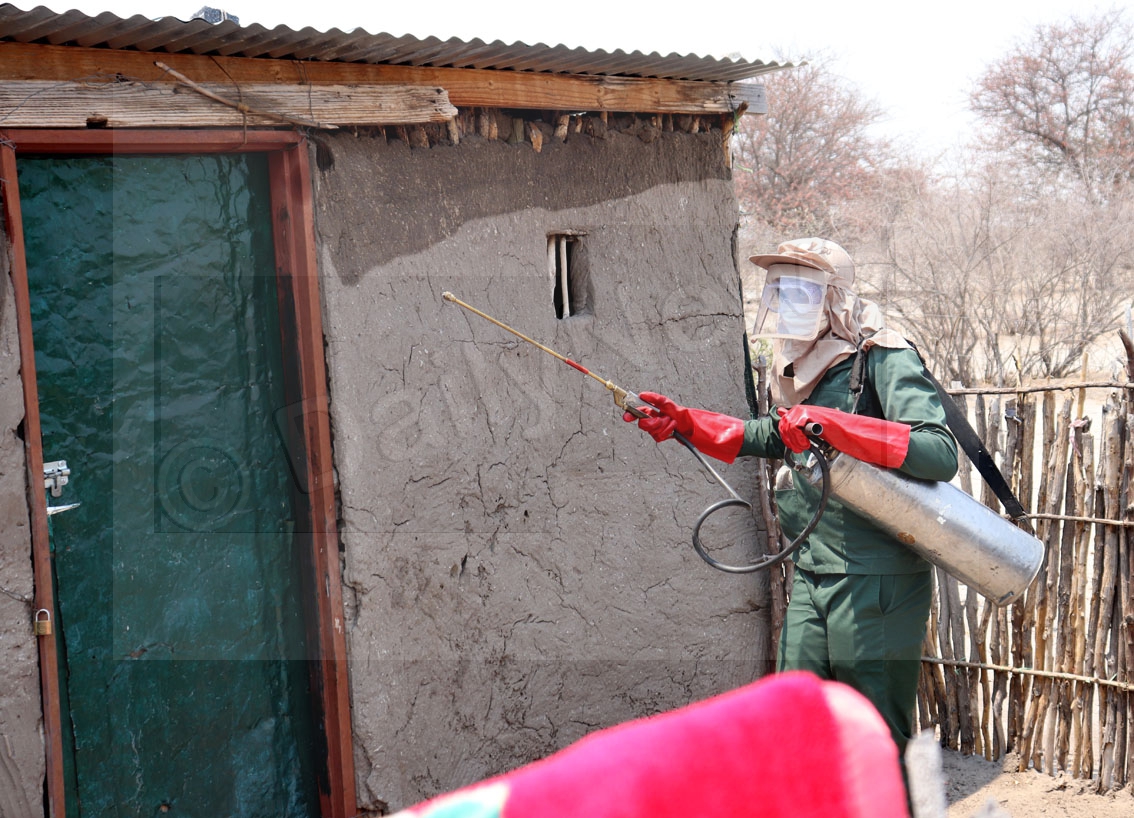
    Community rejection of Indoor Residual Spraying (IRS) for malaria control is a significant challenge in the North West district, often resulting in low coverage rates.

    To effectively mitigate malaria transmission, each year around October to December, IRS campaigns against malaria are conducted with a coverage target of 80 to 85 per cent.

    However, efforts of the health spraying teams often get frustrated by members of the community who refuse to cooperate and decline to have their houses sprayed.

    While studies have shown that when IRS is properly implemented, it can contribute to a significant decline in mosquito population and reduce malaria morbidity and mortality, Deputy Council Secretary – Primary Health, Dr Sandra Maripe-Ebutswe expressed displeasure that community refusal undermined efforts to tackle the malaria epidemic in the district especially during peak season.

    This season, she said they failed to attain the set target as coverage stood at 47 per cent despite heavy rainfalls that fuelled mosquito breeding grounds, raising cases of malaria infection and fatalities.

    She highlighted that IRS was considered the most effective intervention in malaria elimination citing that in other countries, the method was working wonders with malaria cases falling dramatically as members of the community had fully embraced it due to its effectiveness against mosquitoes.

    “Rejection of IRS by the community is a serious concern and yet people are dying of malaria. On daily basis, we record cases of malaria in various areas within our district,” Dr Maripe-Ebutswe emphasised.

    She called on the public to change their mindset and accept IRS by allowing health workers into their homes during campaign, especially since the North West and Okavango districts were classified as malaria-prone areas because of the high number of cases registered annually.

    Reports have indicated that increased cases of malaria were expected in North West district due to water pools across the district. Currently, one death and 115 clinically confirmed cases, of which 11 were children aged under five, have been recorded.

    Community health nurse, Ms Cindrella Gaebowe confirmed the number, explaining that 100 cases originated from the district, 13 were imported from other districts while the rest were imported beyond the border from countries such as Ghana, Zambia and Namibia.

    To control the disease, Ms Gaebowe said IRS campaign was conducted in Nhabe, and in areas within the Okavango Delta and that distribution of treated mosquito nets was also done.

    Meanwhile, some officials had indicated that early floods were anticipated to hit Maun, with water levels continuing to rise in the Okavango River at Mohembo due to persistent heavy rainfall experienced within the Okavango and North West districts.

    They indicated that rivers, lagoons and floodplains in the delta which had been dry for years had recharged and some were already overflowing, resulting in some areas becoming inaccessible due to flooding.

    North West deputy district commissioner, Mr Ramogaupi Gaborekwe stated that a team had been tasked to conduct a surveillance in hotspot areas and see how best they could mitigate the situation before it got out of hand.

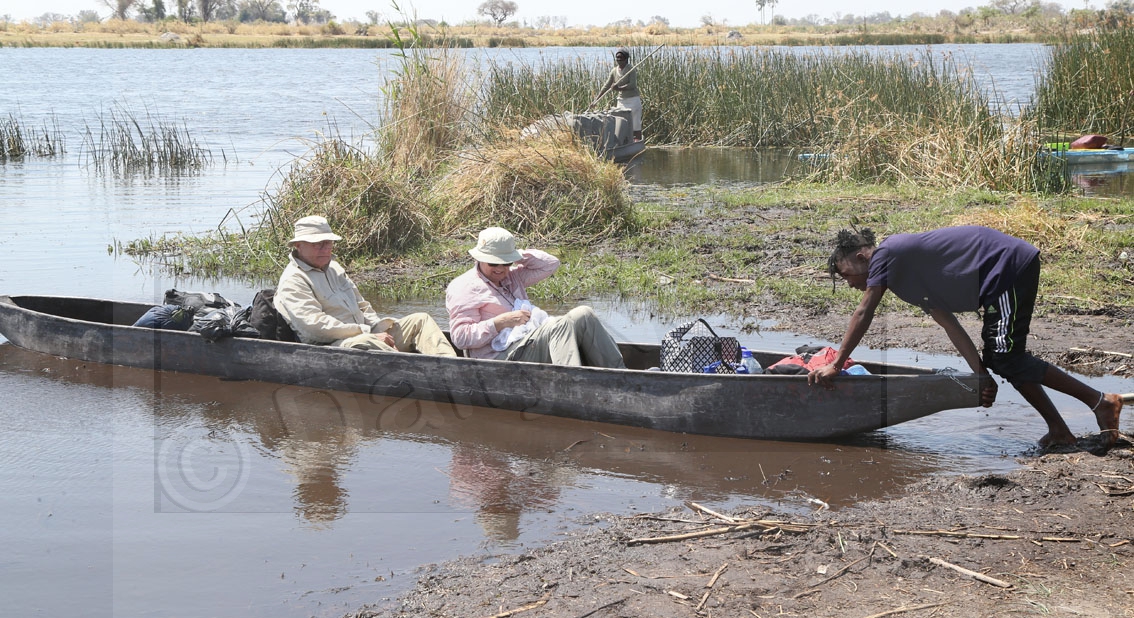
    “Recently, we had to rescue one family by boat as their homestead was engulfed by water, making accessibility difficult. We anticipate more inflows as the water levels continue to rise and efforts are ongoing to strengthen early warning and community awareness systems,” he added.

    A hydrologist from department of Water and Sanitation, Ms Gofaone Maradu stated that based on the observed trends, hydrological flood disaster was anticipated as the inflows from Mohembo were increasing significantly.

    She said the 2025/2026 hydrological season was characterised by significantly improved flow conditions across the Okavango Delta system compared to the 2024/2025 season, noting that sustained upstream inflows, coupled with localised rainfall contributions had resulted in rising water levels and increased system response.

    “We have observed increased inflow volumes from the upper Okavango Basin, recharging of previously dry rivers, lagoons, and floodplains, the rising water levels along the Boro, Gomoti, Thamalakane, and Boteti river systems and that the flood head along the Nhabe River from Thamalakane River is advancing and has now passed Komana Primary School,” she added.

    Ms Maradu also noted that the Thamalakane River back flow along the Boronyane river had crossed the bridge and was about 20 metres upstream the bridge while the Okavango River peak water level recorded during the 2025/2026 hydrological year was still rising but had already approached approximately 3 metres at an earlier stage in the season, indicating a potentially higher or earlier peak.

    However, she explained that the main flood wave from Mohembo had not yet fully propagated to the Thamalakane River but that based on observed trends, downstream areas, including Maun, were expected to experience rising water levels once upstream floodwaters arrived.

    Despite the favourable hydrological conditions, Ms Maradu said monitoring operations were currently constrained by challenges such as continuous rainfall, which had rendered many access roads muddy and impassable, and limited resources including shortage of transport to perform routine monitoring.

    Therefore, she stressed the need for rehabilitation of access roads to key hydrometric sites, re-installation and upgrading of gauges and benchmarks as well as consideration of automated or telemetry-based monitoring systems to improve data continuity during extreme conditions. 

  • Mixed Model of Appointing Judges Suitable For ConCourt

    Mixed Model of Appointing Judges Suitable For ConCourt

    As the debate for and against the establishment of a Constitutional Court continues, Batswana from different quarters are desirous to know the form that it will take and how its judges will be appointed.

    Just as is the case with judicial officers of different lower-level courts, the appointment of judges of Constitutional Courts is a matter that countries handle with great circumspection.

    Often the highest courts marking the pinnacle of the court systems, Constitutional or Supreme Courts, are where they exist, the final stage of legal recourse.

    Their position in the legal structure of any country lends reason to why countries endeavour to do their absolute best in handling the appointment of judges who will sit in their hallowed chambers.

    According to private attorney, Mr Nchunga Nchunga of Chuchuchu Nchunga Attorneys, at the heart of each model of appointing judges of a Constitutional Court is the desire to promote and protect judicial independence, as well as to ensure that the court comes across as legitimate.

    While a couple of models of appointing ConCourt judges existed, Mr Nchunga admitted that none was perfect.

    Nonetheless, he believed the mixed appointment model stood shoulders above the other models as it balanced competing interests, promoted checks and balances and was not prone to political bias.

    For the above reason, the model, in which the Executive, the Legislature and the Judiciary all play a role in appointing judges, would be best suited to Botswana’s legal landscape.

    “The mixed model, where there is a combination of executive, legislative, and/or judicial input as in the case of Germany and Canada would work for Botswana,” he said.

    He explained that for Botswana situation, the Judicial Service Commission (JSC) forming part of the appointing authorities would help ensure and protect the court’s judicial independence.

    Mr Nchunga, a former deputy government attorney at the Attorney General’s Chambers, reckoned however that the mixed appointment model was not without fault and among its weaknesses was that it could be complex, slow and contentious.

    The attorney revealed that other jurisdictions appointed ConCourt judges using the Executive appointment model where the head of state or government appointed judges, often with legislative approval such as in the case of the United States of America and South Africa.

    He noted that the Executive model of appointment had its own pros and cons; its advantages’ being that it was quick and efficient.

    His view was that if appointments were merit-based and appointees had security of tenure, the model could, to a great extent, protect judicial independence.

    “But there is a risk of political interference if appointments are based on friendship, party loyalty or cronyism,” he said.

    Mr Nchunga said their disadvantages were that it was risky with a high possibility of political bias and a potential lack of transparency.

    He added that other countries went the legislative way when appointing judges to their Constitutional or Supreme Courts, with the legislature selecting judges to sit in the apex courts.

    This was a practice that Mr Nchunga noted was followed by some states in the United States of America.

    “The advantage of the legislative election is that it is more democratic as representatives are chosen by elected officials. Its weaknesses include the fact that it can be politicised, with the potential for populism,” he stated.

    Although the model may introduce political pressure from legislators, where judges find themselves having to bend to accommodate politicians’ special interests, it can, on the one hand, insulate judges from executive influence.

    Another model, currently being practiced in India and Australia provided for judicial bodies, often comprising judges, lawyers, and/or academics to recommend candidates for the appointment to the judgeship of the Constitutional Courts.

    To Mr Nchunga, having a judicial body such as the JSC- an expertise-driven entity, shoulder the responsibility of championing the appointment of ConCourt judges usually resulted in merit-based and less-politicised appointments.

    Even so, he felt it had some inherent weaknesses, among which, he cited a lack of democratic accountability and that it carried the potential for elitism and detachment from political reality on the ground as well as a lack of cultural relevance.

    While it promotes judicial independence by involving judicial peers in selection, the JSC model is imbued with the potential for self-perpetuating elite if not transparent and if left without checks and balances mechanisms.

    Underlining why no model of appointing judges was perfect, Attorney Nchunga observed that it was worth noting that not all judges were weak that they would abandon their judicial oath in favour of the Executive’s desires.

    “Judges are human, they are fallible and they are not perfect. Also, not all presidents are corrupt, some maintain integrity,” he further observed, adding that political influence was also possible whatever the methodology employed in appointing the judges.

    That aside, some pitfalls exist that Mr Nchunga believed Botswana should avoid should the country establish a ConCourt.

    Among those, he cited Executive appointments, saying in the event that the country decided to go that route, the Executive should avoid ‘choosing judges friends and acquaintances who are loyal to them or are within their club of elites’. =

    Another mistake worth avoiding was having judges who were detached from cultural reality, the ones who end up with well-researched judgments, which are academic but insensitive to the cultural reality on the ground, Mr Nchunga noted.

    Regarding tenure of office for ConCourt judges, he suggested that it would serve the country well to have either age-limit based tenures or contractual limits with predictable tenures, thereby guaranteeing those in the court’s bench security of tenure.

    Mr Nchunga cautioned against using the ConCourt as a terror machine, which he alleged was the case in some SADC countries.

    “Their Constitutional Courts are oppressive tools of the Executive – oppressing the ordinary citizens, especially political opponents,” he concluded.

    Former court president of Tatitown Customary Court in Francistown, Ms Margaret Mosojane said a ConCourt judge should be someone with a deep understanding of what human rights were; an understanding that goes beyond being merely academic.

    As such, she opined that the judges should be people with a record of having previously dealt with issues of human rights.

    “Much as we emphasise the knowledge-based approach of doing things, experience is also crucial. You might have the knowledge, but do you have the experience?” She asked.

    Should the court be established, Ms Mosojane is all for the appointment of judges who are also alive to the cultures of Botswana’s different tribes.

    “For instance, the judge should be able to understand that to a Zezuru parent, having a minor out in the streets selling vegetables is economic empowerment and not child abuse. This is where cultural sensitivity comes in,” she said. 
  • Shamukuni Burial Saturday

    Shamukuni Burial Saturday

    Former Minister of Justice, Machana Ronald Shamukuni, who passed on April 3, will be buried in Kasane on April 11. 

    Shamukuni was former Member for Chobe from 2014 until 2024 and also served as Minister of Justice.

    A family representative and the deceased’s nephew, Mr Daniel Mwezi also said a memorial service would be held in Kasane on Friday.

    Paying tribute to Shamukuni, Mr Mwezi described his uncle as a kind, humble and family-oriented man who always went the extra mile for his loved ones.

    “He had a way of making people feel loved and treasured because he carried humility in his heart everywhere he went,” he said.

    A close friend, Mr Johane Chenjekwa, said Shamukuni’s passing had left them heartbroken, noting that many had high expectations for his future.

    The Chobe District Council chairperson said their relationship, which spanned many years, grew stronger during his tenure as Chobe Land Board chairperson while Shamukuni served as Member of Parliament for Chobe before being appointed the minister.

    He added that Shamukuni played a pivotal role in shaping his political career by encouraging him to pursue politics.

    “He was a man of remarkable intelligence and profound humility. I truly wish we could find another leader like him because there is so much to be learned from the legacy he leaves behind in politics,” he said.

    In his tribute, former Minister of Basic Education and Member of Parliament for Okavango, Mr Bagalatia Arone, said Shamukuni was more than a friend.

    “We were incredibly close and shared a deep level of trust. We spoke almost every day, confiding our deepest thoughts with one another,” he said.

    Mr Arone recalled that Shamukuni had visited him in his home village of Shakawe in January, where they shared a meal and meaningful conversation.

    He said the news of his passing was devastating and unexpected.